Plane at a airport terminal building
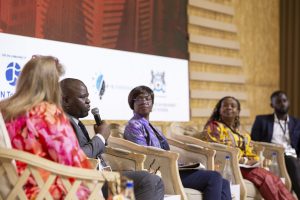
The International Air Transport Association (IATA) has called on African governments to place aviation at the centre of their long-term economic development strategies, arguing that the sector has the potential to drive trade, tourism, job creation, and regional integration across the continent. Speaking during the Focus Africa Conference in Addis Ababa, industry leaders stressed that aviation should be viewed as critical economic infrastructure rather than simply a source of tax revenue.
Kamil Alawadhi, IATA’s Regional Vice President for Africa and the Middle East, said governments must adopt policies that improve safety, reduce operational costs, strengthen sustainability, and make it easier for airlines to do business across Africa. “Aviation is an economic infrastructure for Africa, and stronger aviation networks would help unlock broader economic and social development on the continent,” said Kamil Alawadhi.
A major focus of the discussions was aviation safety, where Africa continues to make progress despite remaining above global accident averages. IATA reported that the continent’s accident rate improved between 2024 and 2025, falling from 12.13 to 7.86 per million sectors. However, this still remains significantly higher than the global average of 1.32. The association urged African states to improve compliance with international aviation safety standards and strengthen accident reporting systems.
The association also warned that the high cost of doing aviation business in Africa continues to undermine growth and connectivity. According to IATA, taxes and charges imposed by governments and infrastructure providers are about 15 per cent higher in Africa than the global average. The organisation criticised excessive passenger data charges in several countries and encouraged governments to reduce aviation taxes to make air travel more affordable.
Concerns were also raised over blocked airline revenues and visa restrictions across the continent. IATA noted that African countries account for the largest share of blocked airline funds globally, with approximately USD 774 million trapped as of March 2026. Algeria alone accounts for USD 258 million. Alawadhi encourages governments to engage with the industry, as unresolved financial restrictions could negatively affect connectivity and airline operations.
Beyond operational challenges, IATA highlighted the growing opportunities for Africa in sustainable aviation and energy security. The organisation said the continent has strong potential to produce sustainable aviation fuel using agricultural and forestry waste, while climate-focused aviation initiatives could create jobs, strengthen energy security, and support Africa’s long-term aviation growth.