

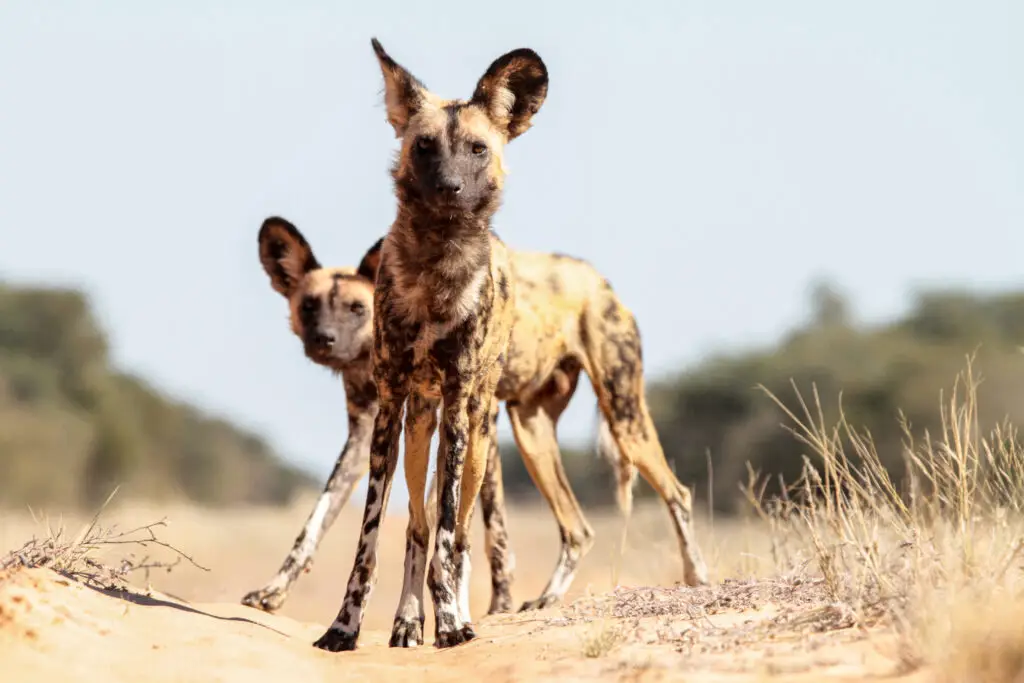
“You can try to preserve an individual lion or wild dog, or you can preserve a chunk of land and protect all of it,” said Dr Glyn Maude, wildlife researcher and the founder of Kalahari Research and Conservation Botswana.
Since 2008, KRC has been working to study and protect wildlife across Botswana’s diverse landscapes, including wild dogs, lions and vultures.
While Maude and his team have been involved with projects throughout the arid areas of Botswana, their focus now is on the Kgalagadi district in southern Botswana. Studying wildlife in this dryland ecosystem in the face of climate change and ever-shifting land use allows researchers to better understand animal adaptation to increasing environmental and human threats. Mitigating human-wildlife conflict is an important element of wildlife conservation, especially in rural Botswana, where communities in the Kgalagadi must contend with the potential challenges of lions, wild dogs and other carnivores preying on goats, horses, cattle and other livestock.
Conservation through collaboration: To ensure land remains intact for wildlife and traditional villages alike, KRC creates partnerships with tourism operators to sub-lease land from communities. This helps generate income for communities and create livelihoods for community members. Villagers not only have opportunities to earn a stable livelihood, but they also learn about the importance of wildlife conservation, too.
Establishing and maintaining boundaries for cattle grazing creates multiple jobs and increases herd safety. In the KD2 Wilderness Area, for example, KRC employs 12 people who serve as lookouts along the cattle boundary. Their task is to keep the livestock within a designated grazing area, which boosts livestock safety and stops agricultural activity from interfering with wildlife. After careful training, the lookout team patrols on horseback and on foot to ensure livestock stays within boundaries. Meanwhile, other members of the community are employed for everything from authorising camping permits to coaching tag rugby.
Thinking for the future: KRC incentivises community efforts to protect wildlife by funding village development as projects successfully move forward. From building toilets to supporting educational pursuits, Maude says that it is critical for locals to care about conservation, which is why most of KRC’s students and team members are Botswana nationals.
As rural communities are additionally involved in KRC’s research projects where target wildlife is studied, there’s a tangible demonstration of the importance of these animals to the entire ecosystem — and along with it comes the continued economic benefits of nature and wildlife tourism.
Visit krcbots.org to read more about the projects of Kalahari Research and Conservation, as well as the sister organisation working to protect vultures and other raptors, Raptors Botswana.


